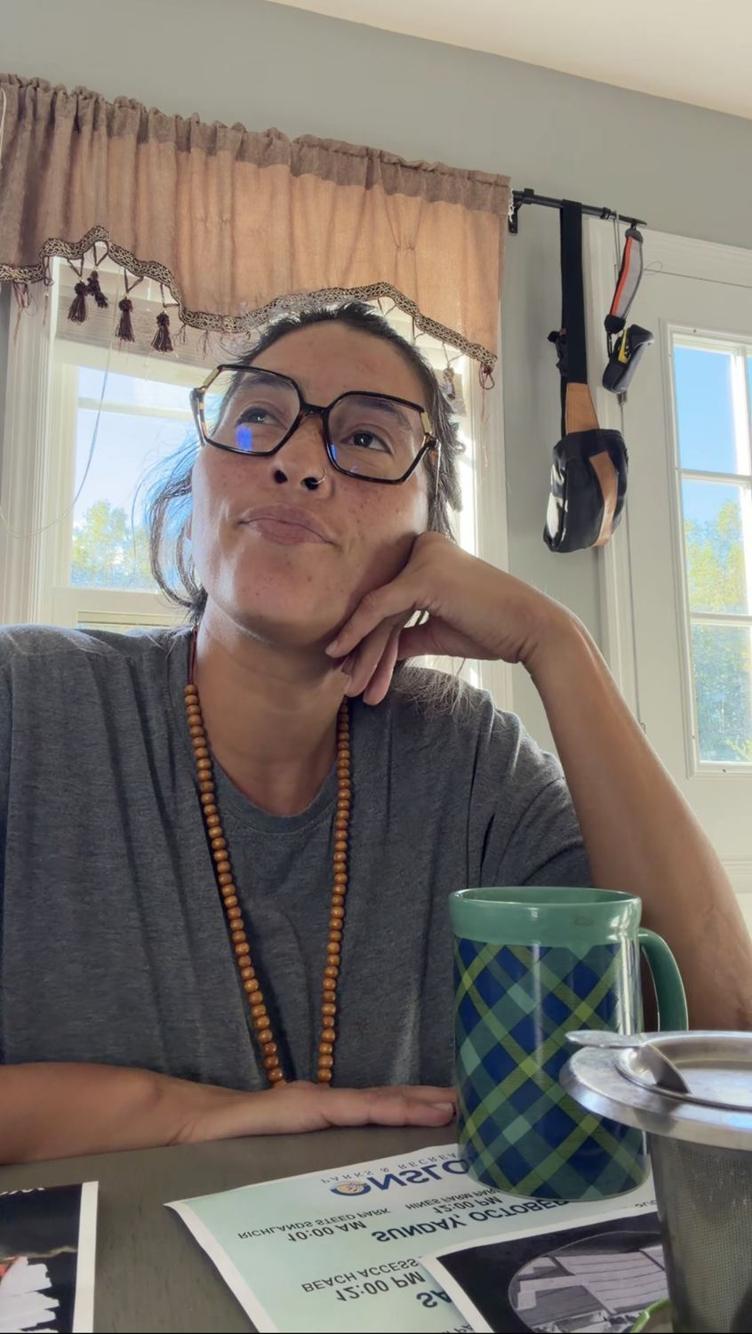
I witness your power so you can reclaim it.
By Paola Andrea Valencia-Cadena · Sociologist, Reiki Master, Mentor
Your life checks every box. School, marriage, kids, work.
And you still can’t sit down.
Even on the couch, your mind is running the list. There is never enough time, and rest feels like something you have to earn first.
I know that woman because I was her. I could explain my patterns to anyone. I had done the therapy, read the books, done the healing. And still the tightness came back. The exhaustion that sleep didn’t fix came back. My body kept sending me the bill.
Most of us try to manage the list better: another planner, another routine, another round of pushing through. Or we decide the problem is the husband, the job, the schedule.
The problem isn’t your husband, your job or your schedule. It’s the grief your body is holding, and some of it was never yours.
I am a sociologist. I was trained to see the invisible structures that shape how we live, what we believe and what we think we deserve. When I brought that training home to my body, everything shifted.
This is the map I use for myself, for my clients and for you, if you are ready. I call it the Savage Map: a path back to your peace. It has five camps. Each one is a rest point, not a finish line.
This is not a climb you push through. But it is a climb. Wounds will show up on the way, and at first it will seem easier to go back to performing, because at first it hurts too much. That’s why the climb takes radical awareness, radical surrender, radical love and radical action. And that’s why there are camps: you stop, you rest, your body adjusts, and you keep going.
How to read this
Your time is sacred. Climb it all now, or stop at the camp that is calling you today.
- Base Camp, The Body: why your body treats rest like a threat, and where the map begins.
- Camp 1, The Mind: the checklist that runs your life, and the lie of “I’ll rest when…”
- Camp 2, The Ancestors: the grief you inherited, and the thinkers who named these traps long before we fell into them.
- Camp 3, The Spirit: why success without soul still feels like failure.
- The Summit, The Return: what your life sounds like when you act from choice, not obligation.
Base Camp · The Body: Still Bracing

Most of us treat the body like a pack mule. We push it, caffeinate it and ignore it until it stops moving.
But your body is not a machine to manage. It is a map of every script you have ever lived through.
The jaw that clenches before you speak. The fog that doesn’t lift. The cramps you learned to push through. The feet that hurt every morning. That is not you failing. That is your nervous system answering a world that taught you to stay alert, stay available and stay quiet.
I call it functional freeze. You are still working. Still achieving. Still capable. But underneath, you are running on emergency reserves.
This is why so many of us can’t “just relax.” When you have spent twenty years being the strong one, stillness doesn’t feel like peace. It feels like danger.
So we start with safety. Not mindset. Safety.
We start in the body: the body scan, the chakra map and your cycle. When I mapped my own body, three points kept calling:
- Root: the part of you that learned to stay alert. Belonging. The fear of not having a place.
- Sacral: the part of you that put pleasure, desire and joy last on the list.
- Throat: the part of you that swallows what she actually thinks.
It’s not magic. It’s understanding the chakras, the information, and observing the body. We find where the old scripts of shame and guilt have settled, and we use breath, movement and ritual to let them move. This is not a diagnosis, and it doesn’t replace your doctor. I walk alongside Western medicine, with a holistic approach.
Sovereignty is not a mindset. It is a body that finally feels safe enough to sit down.
Camp 1 · The Mind: The Checklist That Runs Your Life
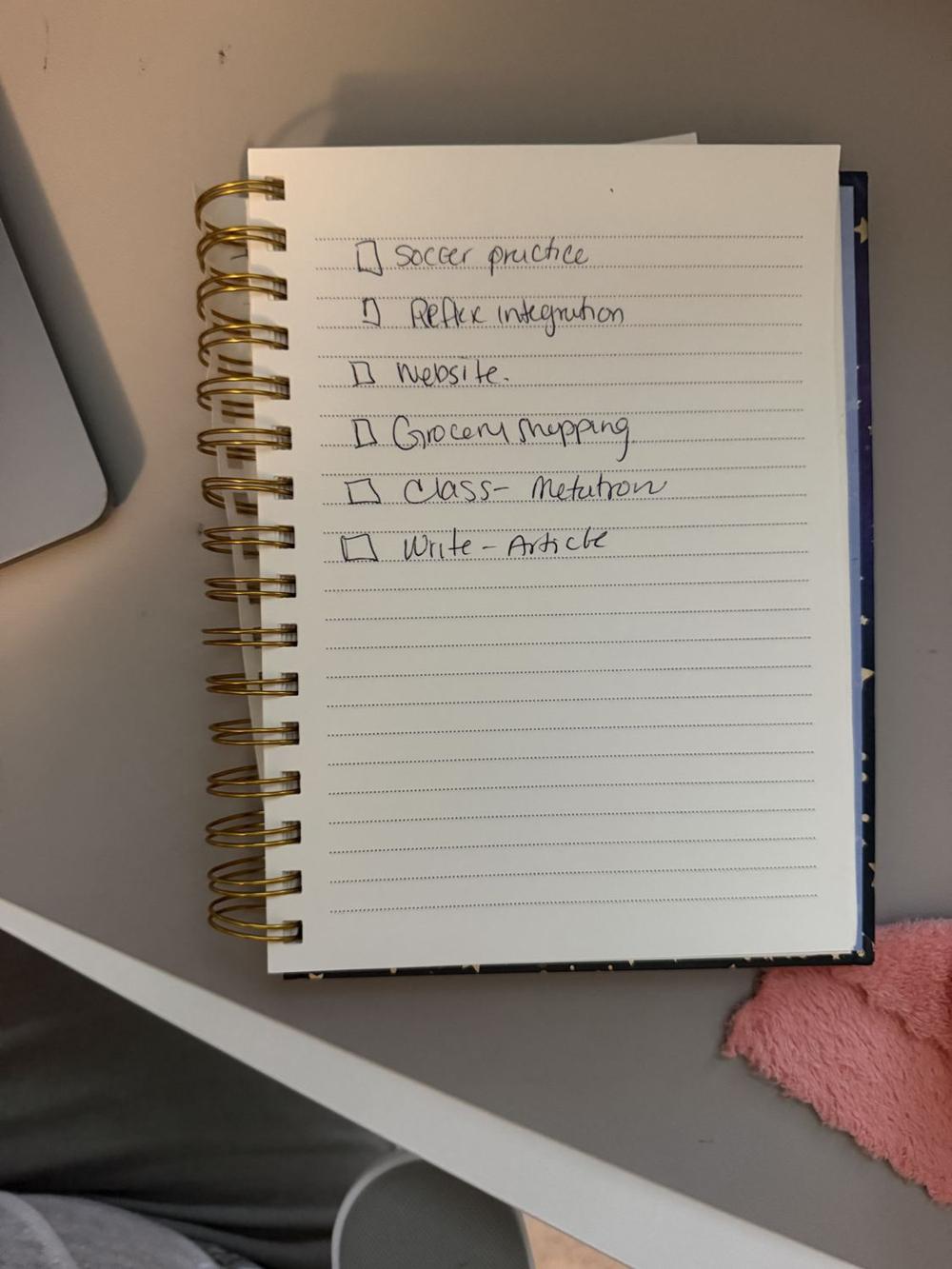
If the body is where the story is stored, the mind is where it keeps running. And for so many of us, it runs as a list.
Society has a very specific picture of a successful woman. She has it all together. She multitasks. She is the anchor. She fixes things. She checks every box.
The sociologist Erving Goffman called this impression management. We keep a “front stage” self that is polished and competent, and we make sure the “back stage” (the doubt, the exhaustion, the very human need for help) never leaks into the light.
Over time, the performance becomes the person. Rest starts to feel like failure. Asking for help feels like losing.
So I ask one question: Who would you be if you weren’t so busy being useful to everyone else?
The lie of “I’ll rest when…”
“I’ll rest when the project is done.” “I’ll take care of myself when the kids are older.” “I’ll stop when I get there.”
That is not procrastination. It is what I call the status tax: the feeling that you have to pre-pay for your right to exist by over-delivering, every single day. Your worth doesn’t feel inherent. It feels like something you have to earn again each morning.
That lie kept you safe once. It doesn’t anymore.
When you stop paying the tax, you start acting from choice, not obligation.
From “good girl” to sovereign self
So much of what we call personality is actually internalized culture. The “good girl” script teaches us to be agreeable and to put everyone’s comfort before our own desire. In a high-functioning woman, that script grows up into the one who carries everyone’s emotions so the family stays stable.
At this camp, we learn to catch that voice in real time and ask: Is this mine, or is this a cultural echo?
Taking off the armour is terrifying. It got you the job. It earned the respect. It kept the family running. But armour is heavy. It protects you from the world, and it also disconnects you from yourself.
Camp 2 · The Ancestors: Some of It Was Never Yours

The feeling of not belonging. The sense that you are fighting something you can’t see. The grief that shows up with no clear reason. We usually call that a confidence problem, or a mood.
It isn’t.
The egg that became you was already in your grandmother’s womb. Some of what your body carries came with it: her grief, her vigilance, her silence. This camp is where you learn which grief is yours and which you were handed, so you can put the second one down.
The traps we live in have also been studied and named for two hundred years. This is where the question changes from “Why me?” to “Why us?” I read these thinkers like a book of maps: here is how the cage was built, so here is where the door is.
- Harriet Martineau taught that you cannot change a society you haven’t first learned to observe. This is the root of my work: stepping back from the frantic doing and becoming the observer of your own life.
- Max Weber named the “iron cage”: a life organized around efficiency and output until there is no room left for meaning.
- Arlie Hochschild named emotional labour: the invisible work of managing everyone’s feelings, so often expected of women and so rarely seen.
- Michel Foucault showed how we learn to police ourselves, how we become our own prison guards.
- Carl Jung named the shadow: the parts of ourselves we were taught to hide. They don’t disappear. They run us from underneath until we turn and face them. This is the heart of my shadow work: we don’t fight the dark, we bring it home.
- Charlotte Perkins Gilman wrote about the “hysterical” woman as someone responding rationally to a life with no room to create.
- Ida B. Wells-Barnett used facts and moral truth together to challenge power: a woman who led without armour in a world that punished her for it.
- Audre Lorde reminded us that caring for ourselves is not self-indulgence. It is self-preservation, and an act of political warfare.
You are not walking alone in the dark. You are part of a lineage.
The voice that drives you is often a cultural echo. You have the ancestral right to quiet it.
Camp 3 · The Spirit: Re-enchanting Your Life
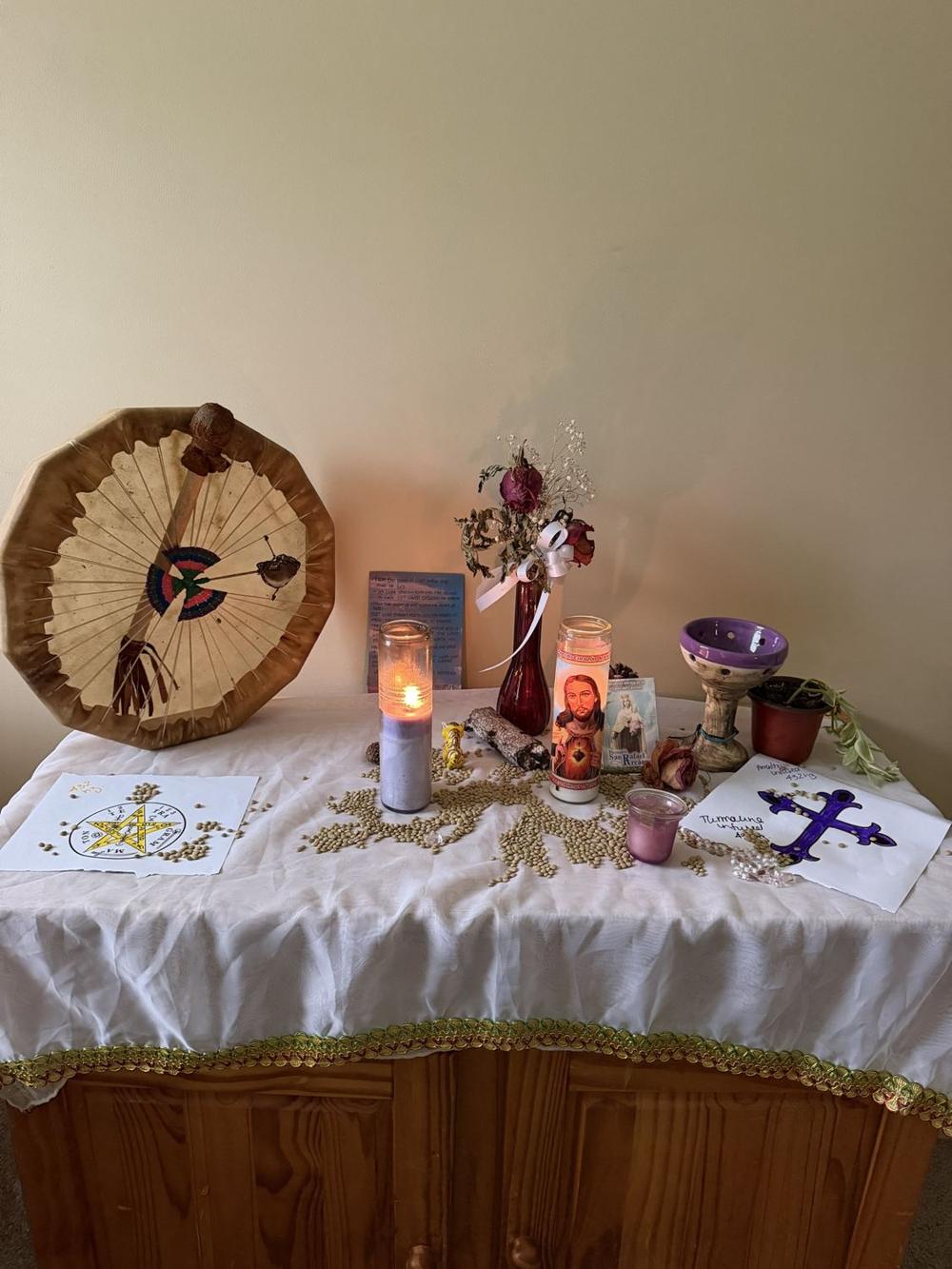
Weber called the modern world “disenchanted.” We were taught that to be taken seriously we have to be rational, predictable, a little cold. That intuition, gut feelings and the mystical are liabilities to hide.
Émile Durkheim described a “malady of the infinite”: the ache of achieving everything the world told you to want and finding an empty space where your peace should be.
I know that ache. I fought with God more than once. I closed my heart to protect it. And when I stopped trying to meditate my way around it and went back to my body, I found God there. I wrote that story in “I Went Back to My Body, and Found God There.”
This camp is about re-enchanting your life.
Grit that runs on love
The world sells a grit that runs on fear: prove yourself, push through the pain, don’t stop. That grit runs out. Burnout is what happens when it does.
The grit I’m talking about lives in radical action, and it runs on love. The discipline lives in awareness and surrender: noticing the wound when it shows up, and staying with yourself instead of running back to the performance.
Devotion is different. It is not working harder. It is removing the dams that were blocking the river. When you are devoted to your own truth, your work becomes an extension of your spirit instead of a forced march.
You don’t have to choose between being a powerful woman of action and a soft woman of spirit. You can read a balance sheet and a birth chart. You can lead and still listen to your intuition.
The “Savage” in Paola Savage Self is not about aggression. It is about being untamed: reclaiming the parts of you that were socialized into silence.
Success is not how much you take up in the world. It is how much of yourself you inhabit while you are in it.
The Summit · The Return: Stop Performing, Start Inhabiting
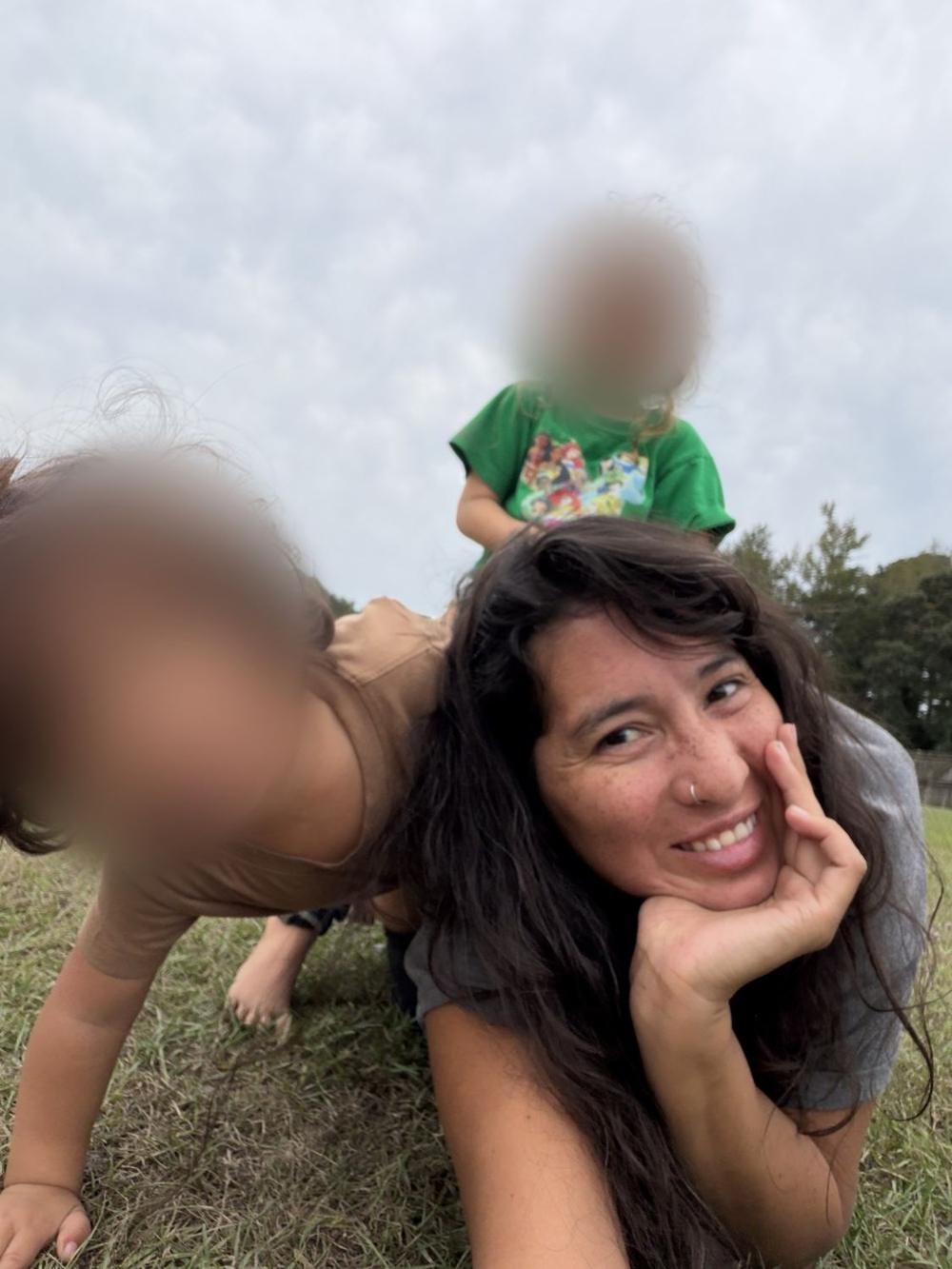
Behind you: the checklist, the good girl, the iron cage of always producing.
In front of you: open territory.
In sociology we call this a liminal space: the threshold where you are no longer who you were, and not yet fully who you are becoming. It is uncomfortable. It is also where everything changes.
This is what the return sounds like. Maybe one of these will be you:
- I’m the kind of woman who sits down on a Sunday afternoon and doesn’t call it lazy.
- I’m the woman who notices the anger in my jaw before it comes out of my mouth.
- I’m the kind of wife who asks for help before I’m furious, not after.
- I’m the daughter who can say no to my parents and still love them.
- I’m the kind of mother who rests where my kids can see it, so they learn they can too.
- I’m the woman who knows which grief is mine and which I was handed, and I’ve put the second one down.
- I’m now the woman who lets herself be held. And doesn’t bite.
I witness your power so you can reclaim it.
Where to begin
A map is just lines on paper until you take the first step.
If your body is running the checklist, start with the Chakra Reset: seven guided journeys, one for each chakra, so you can see where your body is holding the story and why. Every month we meet live to integrate it together. Begin the Chakra Reset
Not ready for that yet? At least start here: the free 6-minute body scan. Take the body scan
Radical awareness is catching your jaw clench before the yes comes out. Radical surrender is letting the grief come up instead of cleaning the kitchen. Radical love is staying with yourself when the old wound shows up, instead of leaving. Radical action is saying the true sentence out loud, even while your voice shakes.
Beyond the map is where you stop studying your body and start living in it. If you are ready to go there with me, one to one, apply for I Am The Temple, my mentorship for women who are done performing and ready to inhabit their lives. Apply for I Am The Temple
The armour is down. The heart is open.
Welcome home to yourself.
About Paola
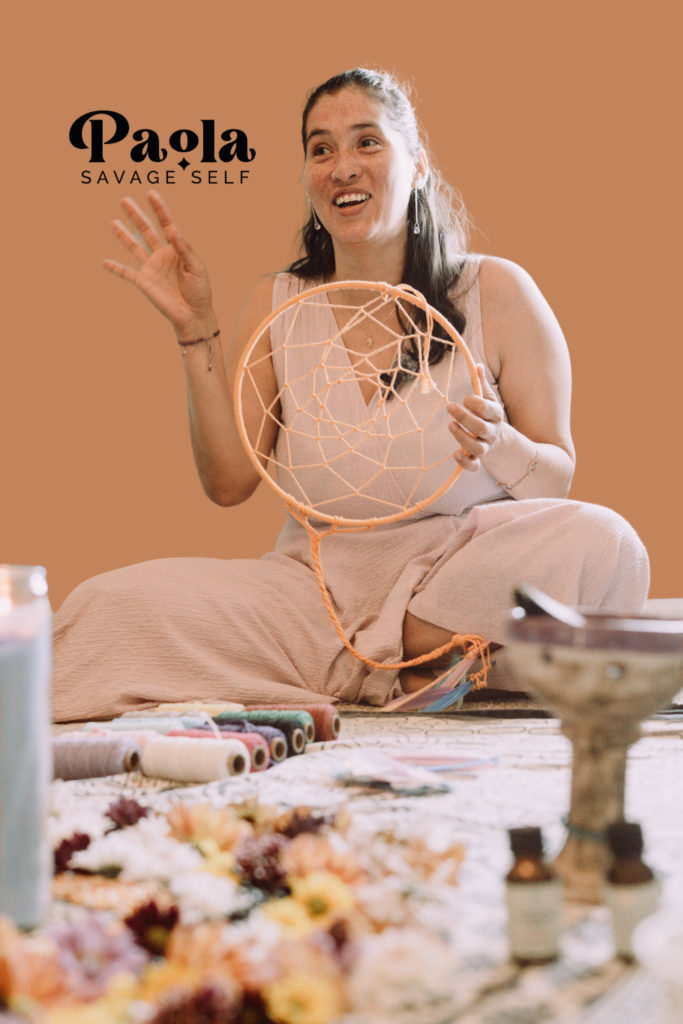
Paola Andrea Valencia-Cadena is a sociologist, Reiki Master and the founder of Paola Savage Self. Born in Cali, Colombia, and now living in Jacksonville, North Carolina, she brings together social science, somatic and energy work, and ancestral wisdom to walk women who hold everything together back to their peace. She and her family are building Casa Shekinah, a space where the divine is invited to dwell in everyday life. She is a mother of two daughters, and they are the reason she does this work.
AI transparency: This article was written by Paola. AI supported structure and editing. The ideas, the story and the voice are hers.